

How to Import Cars from Japan to Australia (2026): Costs and Steps

Updated: Oct 10
Japanese used cars are exported all over the world, but exporting them to Australia is
particularly complicated. The rules are strict, and getting a car from import approval through to registration takes time and knowledge.
There is also a lot of outdated or incorrect information online. If you’re importing a car for the
first time, it can be hard to work out what is actually right.
In this article, I’ll explain the entire process, from buying a car in Japan to registering it in
Australia, as thoroughly and clearly as I can.
I spent years buying cars at Japanese auctions before setting up companies in both Japan and Australia. I now handle the import and export process from start to finish. As a Japanese person working in both countries, I hope this guide will help you.
Why Are Japanese Used Cars Popular in Australia?
Japan is home to major car makers such as Toyota, Honda, Mazda, Nissan and Suzuki, so there
is a huge number of their cars on the domestic market.
At USS Tokyo, one of the world’s largest used-car auction venues, more than 15,000 cars are
listed each week. That gives you an idea of the size of Japan’s used-car market.
Japan has a government vehicle inspection system called shaken. For most private passenger cars, inspections are required every two years after the first inspection at three years. Servicing carried out at the same time often includes oil and filter changes, along with checks of the engine and suspension. As a result, many cars tend to be kept in good condition.
Many people also replace their car after only a few years, or before it reaches 50,000 km, so
plenty of good-condition vehicles come onto the used market.
Utes, which are popular in Australia, are not nearly as common in Japan. On the other hand,
there are plenty of kei cars, including the Alto and N-BOX, and family cars such as the Alphard and Vellfire.
Which Cars Can You Import from Japan to Australia?
SEVS: Specialist and Enthusiast Vehicles
As a general rule, cars that are less than 25 years old cannot be imported unless they qualify
under an eligible pathway such as SEVS. Cars listed under this scheme may be imported. The list mainly includes cars that were not sold in Australia, such as small kei cars, the Alphard and the Corolla Fielder.
Be careful, though. Some listings have expired, and others have specific conditions. Being on
the list does not mean that every example of that car can be imported.
The 25-Year Rule for Older Vehicles
Generally, cars manufactured at least 25 years ago can be imported. With older cars, however, you need to be careful about asbestos and any major modifications. Even if a car can be imported, it may not be eligible for registration if it does not meet your state’s requirements, so check the local rules before buying.
The Personal Import Scheme
If you owned a car in your own name in Japan for more than a year and you are an Australian citizen or permanent resident, you may be able to use this scheme.
When you apply, you need to provide evidence that you lived in Japan and owned the car for more than a year.
How to Import a Car from Japan to Australia: The Process

1. Find a Car in Japan
There are three main ways for someone living overseas to buy a car from Japan.
Japanese Car Auctions
Japan has more than 140 auto auction houses nationwide, with over 100,000 vehicles listed
every week.
With so many JDM models coming through these auctions, buyers from around the world
gather to bid.
Compare that with an average Australian auction, which might have a few hundred cars listed at any given time. The difference is huge. Japan’s used-car market is in another league.
Pros
You can choose from more than 100,000 cars listed each week.
You may be able to buy a car at a lower price.
Professional auction inspectors check the vehicles, which reduces the chance of a seller
hiding a known issue.
Cons
Only dealers with access to Japanese car auctions can bid.
There are risks if you don’t know much about cars.
You are not guaranteed to win the car.
Inspection standards differ between auction houses. If you don’t understand auction grades,
common problems and how to read condition reports, buying at auction can carry significant risks.
If you want to buy at auction, you’ll need a bidding agent or an import specialist who can bid for you.
Japanese Car Export Websites
Many Japan-based export websites list cars for overseas buyers.
Two of the best-known are BE FORWARD and Goo-net Exchange. Both list thousands of
vehicles and offer support with international shipping.
Pros
• The websites are designed for overseas buyers and are easy to use.
• English-language support makes communication easier.
• You may find cars that are not going through auction.
• You can buy a car at its advertised price.
Cons
• The available stock can be limited.
• Prices may be higher than at auction.
These websites make it easy to search for and buy a car from Japan while living overseas. If
you’re buying from Japan for the first time, they’re among the easiest options to use.
These websites may still quote you for a car that cannot be imported into Australia. A car being
listed for sale does not mean it meets Australia’s import rules, so check its import eligibility
before you buy it.
Independent Dealers Selling JDM Cars Overseas
Many independent dealers in Japan use Instagram and Facebook to sell rare JDM cars to buyers overseas.
They often handle cars that never appear at auction or on the major export websites, so you
may find something genuinely unusual.
Pros
You can find rare and unusual cars.
Many dealers can communicate in English.
A video call can give you more detailed information about the car.
Cons
Modified cars may need extra work to pass Australian compliance.
It can be difficult to judge the car’s condition.
2. Check Import Eligibility, Registration and the Total Cost
Before buying, check whether the car can be imported and registered in Australia.
Most export companies do not sell used cars exclusively to Australia, so they do not
necessarily know the Australian import rules in detail.
For many Japanese exporters, the job is limited to arranging the car and the shipping. They may not know what is required after the car arrives or how much you’ll need to pay.
Just because you can import a car does not mean you can register it in Australia.
For example, even an eligible car may be refused registration because it has been modified or does not meet the standards for Australian roads.
If that happens, you may need to replace parts or carry out major repairs, which means
additional costs.
That’s why, before buying, you need to check more than import eligibility. Check the
registration requirements in the state where you plan to use the car and find out what changes or repairs it may need.
When comparing quotes, check whether they include not just the vehicle and shipping, but
also Australian taxes, port charges, compliance, any required repairs and registration.
You should also understand which costs are excluded and which could increase depending on the car’s condition.
3. Buy the Car
Once you’ve confirmed that the car is eligible for import, can be registered in Australia and fits your budget, you can move on to buying it.
For an auction car, your buying agent will place the bid for you. A lot of the information is
available only in Japanese, so choose a buyer who knows what they’re doing.
You can buy from export sites such as BE FORWARD and Goo-net Exchange yourself and make the payment directly.
Most auction agents and exporters, including BE FORWARD and Goo-net Exchange, can
arrange shipping and inland transport from the auction venue to a Japanese port.
4. Apply for Import Approval
Once you’ve checked that the car can be imported, you must obtain Import Approval before
bringing it to Australia.
The application is usually handled by the party receiving the vehicle in Australia, known as the consignee, and is often entrusted to a compliance centre.
Approval usually takes about two to three weeks after the application is submitted.
Apply as soon as you buy the car, and do not ship it until approval has been granted.
If the car is shipped before you receive Import Approval and reaches an Australian port first, it will have to stay there until approval comes through.
Storage alone can add around A$100 per day.
5. Arrange Shipping from Japan to Australia
Once Import Approval has been granted, you can arrange shipping. The route and vessel
schedule will affect the arrival date. I’ll explain the overall timeline later in this guide.
Used cars are mainly shipped from these Japanese ports:
Yokohama
Nagoya
Osaka
The main Australian destinations are:
Queensland - Brisbane - Port of Brisbane
New South Wales and the ACT - Sydney area - Port Kembla
Victoria - Melbourne - Port of Melbourne
South Australia - Adelaide - Port Adelaide
Western Australia - Perth - Fremantle Port
6. Complete Australian Compliance
After the car has cleared customs and quarantine, the next step is compliance. A car arriving from Japan cannot simply be driven on public roads straight from the port.
To register the car in Australia, it first needs to go through a compliance inspection at an
approved compliance centre.
A compliance inspection checks whether the imported car meets the relevant Australian
Design Rules, or ADRs.
The main things checked include:
Whether the vehicle details match the import documents.
Whether it meets the relevant ADR requirements.
Whether it is safe to drive on Australian roads.
Only a car that meets these requirements can move on to registration in the relevant state.
A compliance centre or an Australian import dealer can also help you identify potential
problems while the car is still in Japan.
They may be able to tell you things such as:
“This car is not a good choice to import.”
“Replacing this part would give it a good chance of passing compliance.”
If you identify a problem while the car is still in Japan, you may be able to replace parts or have repairs done there. In many cases, doing the work in Japan costs less and reduces the risk and expense after import.
If you only discover a problem once the car arrives in Australia, you could face extra repair,
storage and re-inspection costs.
7. Register the Car in Australia
Once compliance is complete, you can follow your state’s registration rules, obtain any
required roadworthy certificate, pay stamp duty and registration fees, and get the car on the road.
How Much Does It Cost to Import a Car from Japan to Australia?
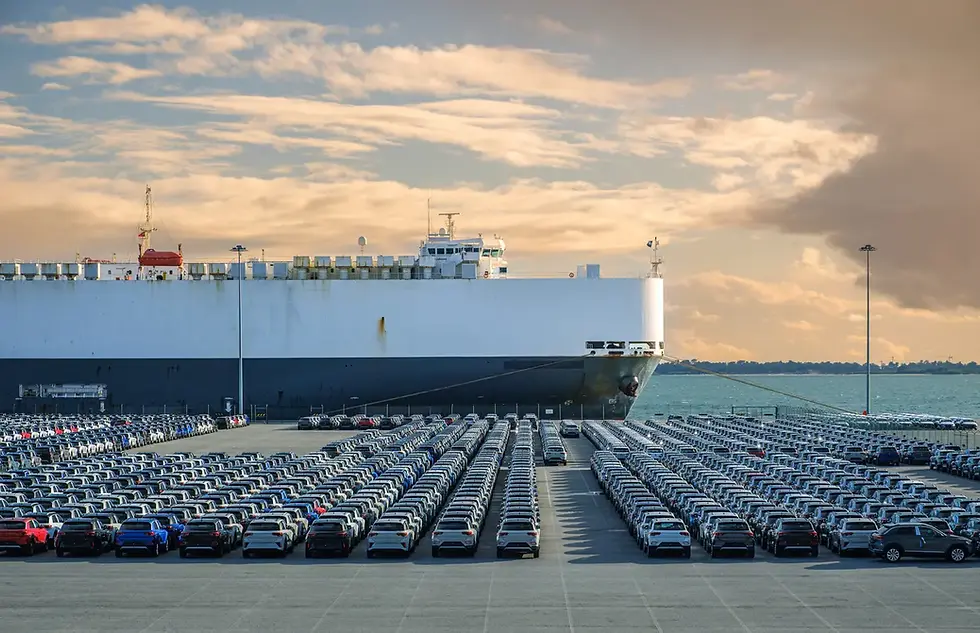
Importing a car from Japan involves a lot more than just paying for the car.
1. Vehicle Purchase Price
Prices on websites may be shown in Japanese yen, Australian dollars or US dollars, so check
the currency carefully.
If the price isn’t in Australian dollars, exchange rate changes can make a big difference to what you end up paying. Keep that firmly in mind.
2. FOB Surcharge: ¥100,000-¥200,000
This charge includes auction fees, inland transport, port fees, the importer’s fee, quarantine,
cleaning and other administration costs.
3. Shipping: A$2,000-A$3,000
Shipping costs change with the season and the type of car, but for a normal-sized car they
often fall between A$2,300 and A$2,600.
4. GST: Depends on the Car
GST is charged at 10% of the taxable value. That value includes the vehicle price (FOB price),
shipping, insurance and duty, so the 10% is not applied to the car price alone.
5. Customs Clearance: A$100-A$300
This cost normally falls within that range, regardless of the car or the time of year.
6. Import Duty
Cars manufactured in Japan generally do not attract duty. If you import a European or another non-Japanese brand from Japan, however, a 5% duty applies to the FOB price.
7. Luxury Car Tax
If the taxable value, including the car price, duty, shipping, insurance and GST, exceeds
A$80,809, or A$91,661 for fuel-efficient vehicles, the car becomes subject to Luxury Car Tax
(LCT).
8. Delivery: A$200-A$1,000
The cost depends on how far the delivery address is from the port.
9. Compliance: A$1,000-A$3,500
The cost changes depending on the model and the state. If a problem is found after the car
reaches Australia and it needs repairs, there may be additional costs.
10. Registration Costs
You will need to pay for the relevant roadworthy check, registration and stamp duty under your state’s rules.
11. Importer’s Fee
You will also pay a fee to the importer.
Import Car Examples
Let’s take a look at how much it actually costs.
2011 Toyota Crown Hybrid GWS204 - 45,000 km
Vehicle Price | ①Purchase price | $12,318.18 |
②Japan FOB surcharges | $1,786.56 | |
Shipping Fee | ③Overseas Freight | $2,350.00 |
④Heat Treatment | $250.00 | |
⑤GST and Customs Clearance | $1,890.86 | |
Compliance | ⑥Importer Fee | $2,500 |
⑦Compliance Fee | $2,300 | |
⑧3 months Rego | $300.00 | |
⑨RWC | $100.00 | |
⑩Stamp Duty | $612.58 | |
Drive Away Price | $24,408.18 |

1995 Suzuki Carry DG51T - 51,000 km
Vehicle Price | ①Purchase price | $3,622.32 |
②Japan FOB surcharges | $1,811.16 | |
Shipping Fee | ③Overseas Freight | $2,350.00 |
④Heat Treatment | $250.00 | |
⑤GST and Customs Clearance | $1,071.35 | |
Compliance | ⑥Importer Fee | $2,500 |
⑦Compliance Fee | $2,300 | |
⑧3 months Rego | $300.00 | |
⑨RWC | $100.00 | |
⑩Stamp Duty | $230.00 | |
Drive Away Price | $14,534.83 |

1998 Chevrolet Corvette - 105,000 km
Vehicle Price | ①Purchase price | $19,810.50 |
②Japan FOB surcharges | $1,855.33 | |
Shipping Fee | ③Overseas Freight | $2,300.00 |
④Heat Treatment | $250.00 | |
⑤GST and Customs Clearance | $3,049.42 | |
⑥Duty | $1,342.58 | |
Compliance | ⑦Importer Fee | $2,500 |
⑧Compliance Fee | $1,500 | |
⑨3 months Rego | $300.00 | |
⑩RWC | $100.00 | |
⑪Stamp Duty | $590.00 | |
Drive Away Price | $33,597.83 |

How Long Does It Take to Import a Car from Japan?

From the moment you buy a car in Japan to the moment it is registered and road-legal in
Australia, the process typically takes around two to three months.
The exact timing depends on your Import Approval, vessel schedules and port congestion.
Looking only at sea transit, shipping usually takes between one week and one month.
For example, a ship travelling from Yokohama to Brisbane may arrive in about a week if
Brisbane is its first port of call. If it stops at Sydney or Melbourne before Brisbane, it can take
more than a month.
Even after the car arrives, it still needs to go through quarantine, customs clearance,
compliance and registration. It isn’t ready to drive as soon as the ship docks.
Common Mistakes When Importing a Car from Japan
Buying a Car That Is Not Eligible for Import
If you buy a car that isn’t eligible for import, selling it again in Japan can be difficult. If you
have already brought it to Australia, you may have to pay to ship it all the way back to Japan.
Buying a Car That Cannot Be Registered
Import Approval and Australian registration are assessed separately. Even an eligible car may be unsuitable for Australian roads or too heavily modified to register.
Modifications that look fine in Japan may still need to be changed before the car can be
registered in your state.
The Car’s Condition Is Not What You Expected
It’s common for a car to arrive and not be in the condition you imagined.
You often have to judge it from the auction sheet and photos, and that takes a lot of
experience.
Auction houses and dealers also grade cars differently. Some parts of Japan have heavy snow or high humidity, so watch out for rust underneath the car.
To reduce that uncertainty, we contact the auction house or dealer directly in Japanese. We
ask about things you cannot always see in the sheet or photos, including underbody rust and the condition of the interior.
Not Knowing the Full Cost
Many prices on export websites are just the vehicle price or an FOB price, not the total cost of
getting it on the road.
Leaving out customs-related charges, compliance and registration costs can make a car look cheaper than it really is.
The Car Arrives at Port Without Import Approval
Shipping before Import Approval is granted can leave the car waiting at an Australian port
while you sort out the paperwork, with substantial extra costs.
How to Import a Car from Japan with AUTOSHIFT
1. Tell Us What Car You Want
Send us the model, year, mileage and other details you’re looking for. If you’ve already found a
car on another website, send us the link. We’ll check if it can be imported. If it can, we’ll look
for a suitable car and send you an estimate.
2. Buy the Car
Once you’ve found a car you like, we’ll move ahead with the purchase. For an auction car, you pay a deposit before we bid and the balance if we win.
For a car from another sales website, you pay the vehicle price. If it’s listed on Goo-net Exchange or BE FORWARD, we can also negotiate with the seller and buy it on your behalf.
Payments are handled through our Japanese company, so you can deal with us with
confidence. After the purchase, we arrange transport to the Japanese port.
3. Arrange Import Approval, Shipping and Compliance
We start arranging these steps at the same time so we can get your car to Australia as quickly as possible after purchase.
4. Complete Compliance After the Car Arrives
The car can usually be released from the port around a week after arrival. We take it directly to the compliance centre for the required inspection.
5. Register the Car
If the car passes compliance without issues, we complete the registration process under the
rules of the relevant state, and it is ready to drive.
Why Import a Car from Japan with AUTOSHIFT?
Japanese-Language Negotiation and Pre-Inspection
Most auctions allow a pre-inspection, but the whole process is in Japanese. That’s where being Japanese gives us an advantage.
If the car is being sold outside an auction, we can also contact the dealer directly and may be able to negotiate the price.
Help When Damage Happens in Japan
If a car is damaged after reaching the Japanese port, the shipping company’s insurance can cover it. But damage that happens before it reaches the port is not covered by that insurance.
When something goes wrong between the auction house and the port, it can be difficult to
establish who is responsible, and buyers often end up bearing the loss.
Because we also have a company in Japan, we can find out where the problem occurred and claim the repair cost from the responsible party. In one case, a car arrived in Australia with a cracked windscreen. We traced the problem back to the Japanese inland transport company and recovered the repair cost from them.
Access to Cars Beyond Public Listings
The car you want isn’t always listed at a Japanese auction or on a sales website.
We also have agreements with Japanese car dealers, so we can ask whether they have a car in stock that matches a customer’s request.
Repairs and Modifications in Japan
We work with repair shops across Japan and can arrange repairs or modifications before the car is exported.
In many cases, doing that work in Japan costs less than doing it in Australia.
Direct Bidding at Japanese Auctions
Most Australian importers ask a partner company in Japan to buy cars for them.
We have our own auction bidding terminals, so we can bid live ourselves. That gives us more
options when sourcing a car.
Working on the Same Site as a Brisbane Compliance Centre
In 2026, we partnered with a compliance company in Brisbane and moved to a larger site
alongside them. This means we can handle everything from sourcing in Japan through to
compliance at one location, with a stronger system connecting each stage.


Comments