

The Ultimate Guide to Used Car Imports in Australia (2026 Guide)

更新日:9月15日
Japanese used cars are exported all over the worlds, but exporting to Australia is particularly complex. The regulations are strict, and the process takes so long.
Moreover, When you research how to export to Australia, most of the available information seems outdated and about half of them appears to be inaccurate.
In this guide, we at AUTOSHIFT, who handle everything from sourcing vehicles in Japan to selling in Australia, will explain the correct method for importing into Australia.
※We keep this guide up to date whenever regulations or procedures change.
What’s Happening in Australia’s Used Car Market?

Australia is a vast country, and the owning a car isn't just convenient - it's essential for daily life. Unlike Japan, the public transportation isn't always reliable or widespread. A place that's just 15 minutes away by car might take over an hour by bus. That's not unusual at all.
When it comes to buying and selling the vehicles, the system is quiet different compared to Japan. Private sales are the norm, which means you can buy cheaply, or sell a good price. But it also opens the door to scams and dishonest dealings, which remain a serious issue.
Prices are significantly higher than in Japan, and even vehicles with 200,000 to 300,000 kilometres on the clock are sold for amounts that would be unthinkable in Japan.
There is no mandatory vehicle inspection system like Japan's 'Shaken', and most people drive their cars until they're truly worn out. That makes it incredibly difficult to source second-hand vehicle in a good condition locally.
About 5 years ago, you could still find safe, reliable cars for around $5,000. Lately, it's become extremely difficult to find cars in good condition within that price range.
That's exactly why, Japanese imports are becoming increasingly popular in Australia. They're often in much better condition and still affordable than locally sold vehicles. For buyers looking for quality and value, Japanese used cars are a smart choice.
Advantages and Disadvantages of Importing Cars

Advantage
Lower Purchase Price
Better Vehicle Condition
Unique Models Not Available Australia
In Japan, vehicle prices are often about one-third of what you'd pay in Australia. Even after adding shipping and import costs, imported cars frequently end up being more affordable than locally sold ones.
Moreover, many Japanese vehicles are well-maintained and come with a solid service history, allowing buyers to enjoy cars in excellent condition.
In Australia, there is a limited selection of seven-seater family vehicles like the Toyota Sienta or Alpharld. For those specifically looking for spacious, reliable family cars, Japanese imports offers a fantastic alternative.
Disadvantage
Longer Wait Times
Insurances limitations
parts Availability
Once you purchase a car in Japan, it typically takes 2-3 months before it's ready to drive in Australia. This includes shipping, customs clearance, compliance checks, and registration. For those who need a car urgently, this waiting period might feel a bit long.
That said, the vehicles we mainly import—such as Toyota hybrids, Hiace vans, and Honda Fit—share the same engines and parts as locally sold models like the Yaris and Jazz. This means you won’t have trouble finding replacement parts or servicing options.
However, if you're importing a more unique or less common model, it may take a little longer to source specific parts.
Fortunately, our company also operates in Japan, which allows us to locate and ship parts directly. We do our best to ensure that any necessary components arrive as quickly as possible, minimizing delays and keeping your vehicle in top condition.
What kind of vehicles can be imported ?

So, what types of vehicles can actually be imported into Australia?
It's a common misconception that any Japanese car can be brought in - but in reality, Strict regulations apply.
There are four categories of vehicles that are eligible for import under Australian law.
# Important : Vehicles that are currently sold as new in Australia cannot be imported - even if they're Japanese models.
1.Vehicles listed on the Government-Approved Register
As mentioned earlier, vehicles that currently are sold as new in Australia and are less than 25 years old cannot be imported.
However, if a vehicle is listed on the Government-Approved Register known as ROVER (Register of Approved Vehicles), it may be eligible for import - even if it hasn't reached the 25 years old.

Many of the vehicles listed on the ROVER register are Hybrid models or cars that aren't officially sold in Australia.
Interestingly, even if a car is sold locally, it may still be eligible for import if it has a different engine or is marketed under a different name.
However, the rules vehicles imports change frequently - sometimes on a weekly basis- and the ROVER list often fails to keep up with these updates. Just because a car appears on the list doesn't guarantee it can be imported.
It’s not uncommon for a vehicle to suddenly become ineligible for import, or for the approved year range to change without notice.
That’s why it’s essential to consult with professionals like us who monitor these changes daily and can confirm whether a specific car is currently eligible.
This uncertainty is one of the most challenging aspects of importing vehicles into Australia.
If a car is mistakenly exported and later found to be ineligible, it must be returned to Japan after arriving at the Australian port—resulting in double shipping costs. So careful planning and expert advice are absolutely critical.
To prevent such issues, we have created a dedicated website to check whether your vehicle can be imported or not.
Please feel free to use it if you wish.
2. Vehicles that are more than 25 years old
Vehicles that are more than 25 years old can be imported into Australia without restriction.
These are commonly referred to Classic Cars.
However, it's important to note that older vehicles may contain Asbestos in certain components. If you're importing a classic car, it must undergo Asbestos inspection and clearance before it can ne released from customers.
3. Vehicles that have been owned in Japan for over one year
If you're owned a vehicle in Japan under your name for more than one year, you can import it to Australia without any model restrictions.
However, this service is available exclusively to Australian citizens or those who hold Australian permanent residency.
4. Special Purpose Vehicles
Vehicles used in competitions—such as Formula 1 cars—and specially equipped vehicles like those designed for disability support can be imported with the appropriate application and approval. These are considered special purpose vehicles, and while they fall outside standard categories, they may be eligible under specific import exemptions.
The Process of Importing Used Cars from Japan to Australia
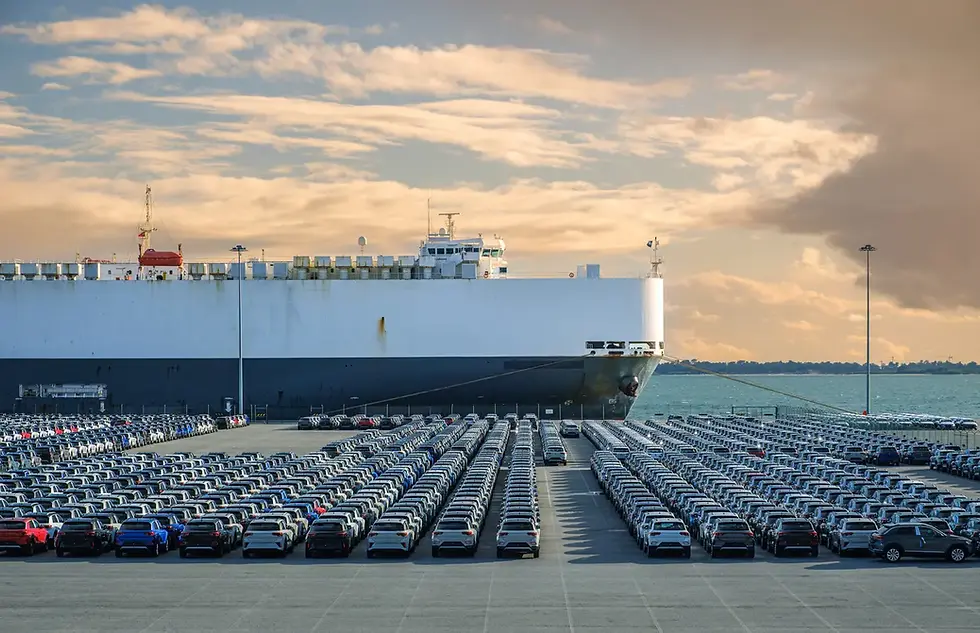
1. Sourcing Vehicles in Japan
If you're exporting a vehicle that you already own under your name more than year, you only need to complete the export procedures.
However, in all other cases, you'll need to purchase a vehicle in Japan before it can be exported.
The most common method is to use a importing agency like ours, where we source vehicles through Japanese Auto Auction on your behalf.
You can also purchase a vehicle directly from a used car dealership, but keep in mind that features like registration and warranty are not required for export - so you may end up paying more than necessary.
If you're already living in Australia, and wish to import a Japanese vehicle, using an import agent to purchase the car for you is essentially the only viable option.
As I've mentioned several times already, before purchasing any vehicle, you must confirm whether it's actually eligible for export.
2. Applying for Import Approval
When exporting a vehicle to Australia, you are required to obtain Import Approval- an official permit issued by the Australian Government.

The application for this document must be submitted by the consignee - the person who will receive the vehicle in Australia.
While individuals are technically allowed to apply on their own, in reality, the process can be quite complex and challenging without the help of a professional import agent.
Once submitted, it typically takes two or four weeks for Import Approval to be granted.
[Required Documents for Imported Approval Application]
Purchase Price of the Vehicle (Including all associated costs such as service fees and inland transport to the port - Commonly referred to as FOB)
Photos of the vehicle
Export Certificate
Month and Year of Manufacture
Odometer Reading (Mileage)
3. Arranging Shipping
Once the Import Approval has been obtained, the ship arrangement should be requested from a shipping company.
This task must be carried out by the shipper (the company exporting the vehicle from Japan).
When importing a car from Japan to Australia, the available ports are YOKOHAMA, OSAKA and NAGOYA.
There are several shipping companies to choose from, but their services and pricing are generally quiet similar.
All we need to do is delivered the vehicles to the designated location at the port in Japan.
After that, everything else - including customs clearance, quarantine heat treatment, shipping arrangements, and inland transport the final destination in Australia- can be fully outsourced to the shipping company.
4. Compliance
After the vehicle arrives in Australia, it must undergo an inspection at the Government Approved Mechanic workshop.
This inspection is not for major modifications- it simply checks whether the vehicle is in good condition and whether there are any differences between the export documents and the actual vehicle.
Only after this inspection is completed will the vehicle be delivered to you.
Once registered, the car will be ready to drive legally on Australian road.
Shipping Time and Costs
This is probably the part everyone is most curious about:
How much time and money dose it actually take to import a car into Australia ?
Estimated Shipping Time

Depending on the circumstances, it usually takes around 2 to 3 months from sourcing a vehicle in Japan to getting it road-ready in Australia.
The time required for transportation can vary significantly depending on factors such as the wait for import approval and shipping congestion
Estimated Shipping Cost
The total cost of importing a vehicle from Japan to Australia varies depending on the car, but in general, you can expect an additional $7,000-$15,000 AUD on top of the vehicle's purchase price. This include;
Shipping and Freight charge
Compliance
Registration and Roadworthy Certificatio
Import duties and Administrative fee
Japanese vehicles imported from Japan are exempt from import duties, however Non-Japanese vehicles exported from Japan ( e.g. European Cars ) are subject to a 0.5% import duty.
If the purchase price in Japan exceeds ¥8,000,000 (approx. AUD $80,000) the vehicle may be subject to Luxury Car Tax (LCT) in Australia. This applies to high-end models and can significantly increase the total cost.
Example Cost Breakdown
{ Japanese Auction Price (Incl. Tax) } { Estimated Total Cost in Australia }
· ¥660,000 → $17,000-$18,000 AUD
· ¥1,100,000 → $22,500-$23,500 AUD
· ¥3,300,000 → $47,500-$48,500 AUD
· ¥5,500,000 → $71,500-$72,500 AUD
Why Choose AUTOSHIFT ?
Our Greatest Strength: End-to-End Service from Japan to Australia
From sourcing vehicles in Japan to registration and delivery in Australia, we handle everything in-house.
We take full responsibility for every step — from selecting the right car to ensuring it’s fully registered and ready to drive in Australia.